AI Beyond Earth
Artificial Intelligence is revolutionizing our understanding and exploration of the cosmos.
The AI4Space workshop at CVPR 2026 (tentative) brings together researchers, engineers, and visionaries to push the boundaries of AI for space science, exploration, and technology. Our vision is to foster interdisciplinary collaboration, inspire innovative solutions, and accelerate the integration of AI into all aspects of space missions—from autonomous spacecraft and planetary science to satellite data analysis and interstellar communication.
In an era where space missions increasingly demand autonomy, resilience, and intelligence at the edge, AI has become a critical enabler for next-generation capabilities. From optimizing scientific returns in planetary exploration to enabling real-time fault detection and response in deep-space missions, intelligent systems are redefining how we design, operate, and interact with spacecraft and space infrastructure.
The workshop provides a platform to address key scientific and technical challenges: how can AI models trained on Earth generalize to the harsh, unstructured, and data-constrained environments of space? What theoretical insights can help us design AI systems that are verifiable, interpretable, and fail-safe in mission-critical contexts? And how do we build trust in autonomous systems when ground control is hours—or even days—away?
AI4Space seeks to bridge these gaps by fostering dialogue between machine learning experts and domain scientists. Topics of interest include onboard learning and adaptation, sim-to-real transfer for planetary robotics, physics-informed neural networks for orbital dynamics, vision-based navigation, multi-sensor fusion for Earth observation, and AI-driven mission planning and scheduling.
By charting the intersection of artificial intelligence and space systems, the AI4Space workshop invites the research community to shape the algorithms, frameworks, and principles that will define intelligent exploration—across Earth orbit, the Moon, Mars, and beyond.
Workshop Objectives
Cutting-Edge Research
Highlight cutting-edge AI research and applications in space science and engineering.
Foster Collaboration
Foster collaboration between AI experts, astronomers, planetary scientists, and aerospace engineers.
Future Directions
Identify open challenges and future directions for AI in space exploration and technology.
Responsible AI
Promote the responsible and ethical use of AI in space missions and data analysis.
| Submission Guidelines | |
|---|---|
| Publication | Papers will be fully peer reviewed and accepted papers will be published in the proceedings of CVPR 2026 Workshops. Paper submission will be conducted through CMT3. See key dates for submission deadline and reviewing timeline. |
| Policies | AI4Space follows the submission policies of CVPR 2026. Submissions should be sufficiently original works not under consideration or review in other venues. Reviewing is double blind - remember to remove your names and affiliations in the submitted version (selecting the reviewing option in the LaTeX template will take care of that) For style and formatting, please use the official CVPR 2026 LaTeX template. |
| Resubmissions | We highly encourage submission of papers relevant to AI4Space that were rejected from the main CVPR conference (view deadlines at Call for Papers). |
| Presentation | Accepted AI4Space papers are expected to be presented in person at the workshop, which will be co-located with CVPR 2026. |
| Travel | If you require a formal invitation letter to facilitate your travel to CVPR 2026 in San Diego, please visit the main conference page. |
| Ethics | All papers published via this workshop must be aimed towards the peaceful usage of AI for space. |
Workshop Topics
Autonomous Spacecraft
Navigation and decision-making for robotic missions.
Earth Observation
Analyzing satellite imagery for climate and disaster response.
Planetary Science
Pattern discovery in rover and telescope data.
Space Communication
Optimizing data transmission for deep space missions.
In-Space Manufacturing
AI for building infrastructure in orbit and beyond.
Invited Speakers

Victoria Ashley Villar
Academic Talk
Prof. Villar is a prominent researcher from Harvard University in the use of data-driven methods in astronomy. She has made significant contributions to the field by developing statistical and deep learning methodologies for astronomical data processing.
Learn More
David Rijlaarsdam
Industrial Talk
David Rijlaarsdam is Director of Space System Engineering for Ubotica Technologies, where he manages the Space System R&D team and is involved as a System Engineer in several space missions.
Learn More
James Parr
Academic Talk
James is the founder and CEO of Trillium Technologies, which specializes in applying AI to grand challenges. He is also the founder of FDL, an AI research lab partnership with ESA in Europe and NASA in the USA.
Learn More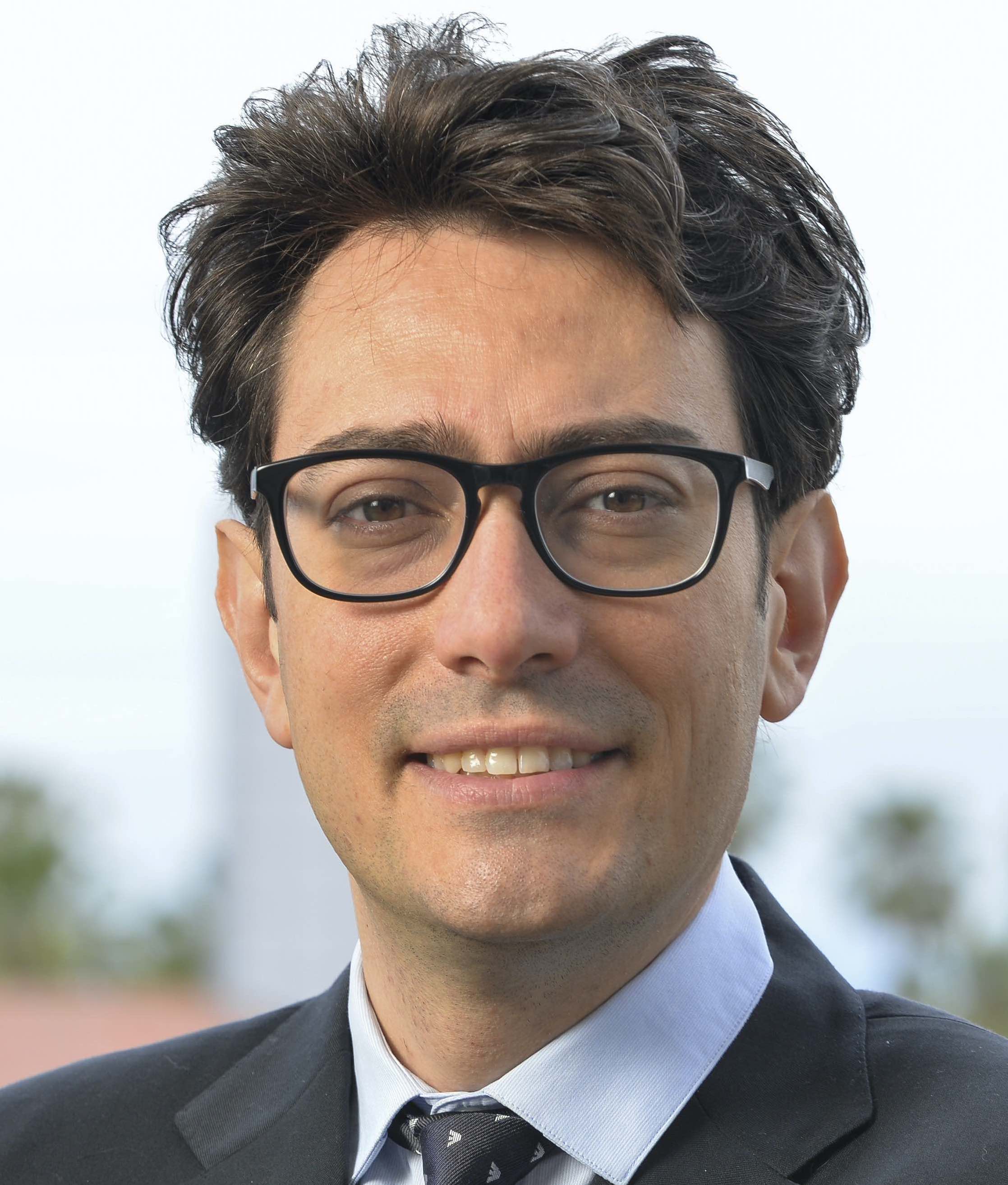
Marco Pavone
Academic Talk
Marco Pavone is Director of Autonomous Vehicle Research at NVIDIA. His main research interests are in the development of methodologies for the analysis, design, and control of autonomous systems, with an emphasis on self-driving cars, autonomous aerospace vehicles, and future mobility systems. He is currently on partial leave from Stanford University, where he is an Associate Professor of Aeronautics and Astronautics and the Director of the Autonomous Systems Laboratory. He is a recipient of numerous early-career awards and currently serves as an Associate Editor for the IEEE Control Systems Magazine.
Learn MoreAi4Space: Challenge 2026

SPARK2025
We are excited to co-host an AI for space challenge, SPARK 2026, which follows from the successful previous editions of the event at AI4Space @ ECCV 2022.
The latest edition of SPARK (SPAcecraft Recognition leveraging Knowledge of Space Environment) aims to design data-driven approaches for spacecraft detection and trajectory estimation.
Stream-1
Detecting space objects in RGB images.
Stream-2
Spacecraft trajectory estimation in a rendezvous scenario.
SPARK will utilise data synthetically simulated with a game-based engine in addition to data collected from the Zero-G lab at the University of Luxembourg.
The datasets involved are larger and more diverse than that used in previous editions.
Get In Touch
Questions? Ideas? Want to collaborate? Reach out to the AI4Space mission control!
For inquiries, please email us at: gabriele.meoni@esa.int